Beyond the Surface: What Southern Resident Grief Tells Us About the Minds We're Losing
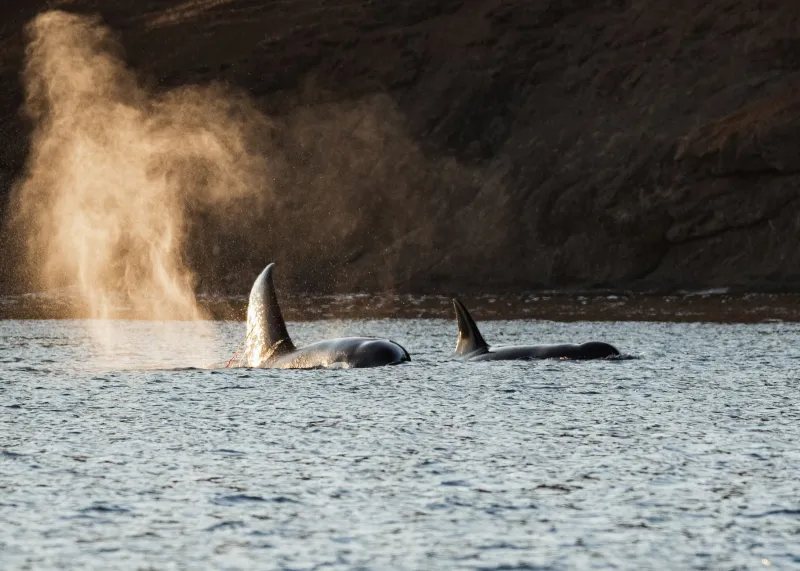
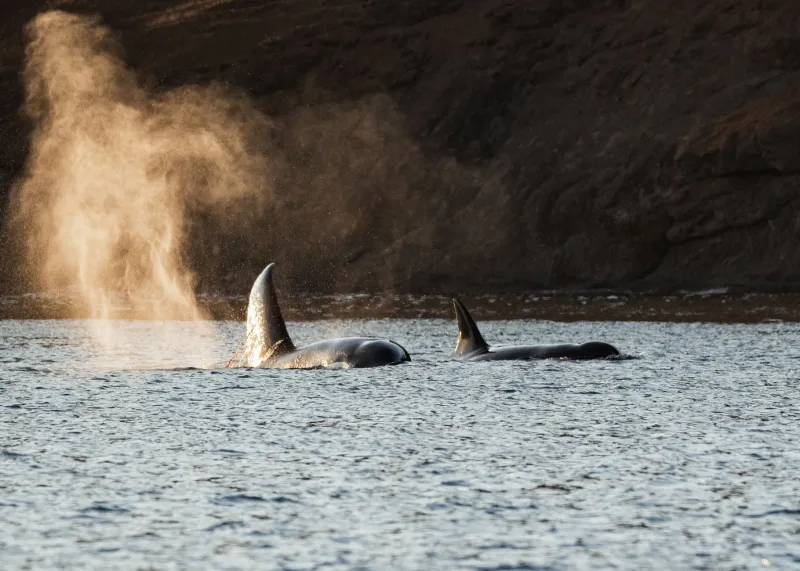
In the summer of 2018, a female Southern Resident killer whale named Tahlequah carried her dead calf through the waters of the Salish Sea for seventeen days. She refused to let the body sink. She pushed it to the surface again and again across more than a thousand miles of ocean, even as the decomposing weight grew heavier. The world watched, transfixed and heartbroken. Scientists called it an act of mourning. Critics urged caution about anthropomorphizing. And yet, for those who study cetacean cognition and behavior, Tahlequah's vigil was not a surprise — it was a confirmation of what the data had been suggesting for years.
Southern Resident killer whales, already burdened by dwindling Chinook salmon populations, persistent chemical contamination, and relentless vessel noise, are also carrying something less visible: the cumulative psychological weight of loss. As their population hovers near 73 individuals, the question of whether these animals suffer emotionally is no longer purely philosophical. It is a conservation question with urgent policy implications.
What the Science Actually Says
The study of cetacean emotion is a relatively young field, but it has produced findings that are difficult to dismiss. Research published in peer-reviewed journals over the past two decades has documented behaviors in killer whales and other cetaceans that parallel the neurological and behavioral signatures of grief in mammals, including humans. Southern Residents, in particular, have been observed lingering near the bodies of deceased pod members, vocalizing in patterns that differ markedly from their typical communicative repertoire, and exhibiting prolonged periods of reduced foraging activity following a death.
The neuroanatomical basis for these behaviors is increasingly well understood. Orcas possess a highly developed limbic system — the brain region associated with emotional processing — and their cortex contains spindle neurons, a class of nerve cells once thought to be exclusive to humans and great apes. These neurons are associated with social awareness, empathy, and the processing of complex emotional states. Their presence in killer whale brains is not incidental. It suggests a capacity for subjective experience that conservation frameworks have been slow to integrate.
Dr. Lori Marino, a neuroscientist who has spent decades studying cetacean cognition, has argued that the evidence for rich emotional lives in killer whales is now overwhelming. "These are not creatures that simply react to stimuli," she has noted. "They have identities, relationships, and the capacity to suffer the loss of both."
The Compounding Math of a Small Population
For Southern Residents specifically, the emotional calculus of loss is particularly brutal. In a healthy killer whale population, death is distributed across a broad social network. Grief, if we accept that word, is shared and absorbed by many. But in a population of fewer than 75 individuals, organized into three tightly bonded matrilineal pods — J, K, and L — every death lands with seismic force.
These whales do not form casual associations. They live in multigenerational family structures in which bonds between mothers and offspring persist for decades, sometimes for life. Males, in particular, maintain extraordinarily close ties to their mothers well into adulthood, often traveling and foraging in near-constant proximity. When a matriarch dies, she does not simply leave a vacancy in the pod hierarchy. She leaves behind a network of relationships that must restructure itself entirely, often under conditions of simultaneous nutritional stress and environmental disruption.
Researchers at the Center for Whale Research have documented measurable declines in the health and survival rates of adult males following the deaths of their mothers — a phenomenon sometimes called the "grandmother effect" in reverse. Without the navigational knowledge and social anchoring that elder females provide, surviving pod members appear to experience heightened stress, reflected in elevated glucocorticoid levels detectable in fecal samples. Stress hormones, in other words, rise when the family fabric tears.
Trauma Without a Name
The conservation community has developed sophisticated vocabulary for describing the physical threats facing Southern Residents: prey depletion, bioaccumulation of polychlorinated biphenyls, acoustic masking from commercial shipping. What it has not developed, with equivalent rigor, is a vocabulary for the psychological dimension of population collapse.
Yet the behavioral evidence is accumulating. Researchers have observed what appear to be prolonged periods of social disruption following multiple deaths in quick succession — intervals in which pod cohesion weakens, vocalizations decrease, and individuals spend more time traveling alone or in smaller subgroups than is typical. Whether these observations constitute evidence of something analogous to collective trauma is debated. But the debate itself reflects a broader reluctance within policy circles to treat emotional well-being as a legitimate conservation metric.
That reluctance has consequences. Recovery plans for the Southern Residents, including those issued under the Endangered Species Act, focus almost exclusively on measurable physical parameters: prey availability, contaminant loads, vessel proximity thresholds. These are critical variables. But they do not capture the full scope of what a population under severe stress is experiencing, nor do they account for the ways in which psychological distress may independently compromise reproductive success, immune function, and social learning.
Rethinking What "Protection" Means
Arguing that killer whales grieve is not a sentimental position. It is an empirically grounded one with direct management implications. If Southern Residents experience genuine emotional suffering in response to loss — and the available evidence strongly suggests they do — then every death within the population represents not only a demographic setback but a psychological injury distributed across the surviving community.
This realization should sharpen the urgency with which federal and state agencies pursue recovery measures. Increasing Chinook salmon abundance is not merely a matter of caloric sufficiency; it is a precondition for reducing the chronic stress that compounds every social loss these whales endure. Reducing vessel noise is not merely about restoring foraging efficiency; it is about preserving the acoustic space in which these animals communicate, coordinate, and comfort one another. The physical and the emotional are not separate domains. They are inseparable dimensions of the same crisis.
Tahlequah's vigil in 2018 did not end with policy change. It ended when she finally released her calf into the deep water of the Pacific, seventeen days after its death. She returned to her pod. She eventually gave birth again — to a calf, born in 2020, who survived. But the conditions that led to her first calf's death remain substantially unchanged.
The Salish Sea is quieter without the whales it has already lost. It will be quieter still if the ones who remain are not protected in the fullest sense of that word — not merely as biological units to be counted and tracked, but as sentient individuals embedded in relationships that matter, to them, in ways science is only beginning to articulate.
Protecting Southern Residents means protecting what they feel. That is not a concession to sentiment. It is a demand that our science, and our policy, grow large enough to hold the truth of what these animals are.