Chemical Siege: How Toxic Contaminants Are Dismantling the Southern Residents' Last Line of Defense
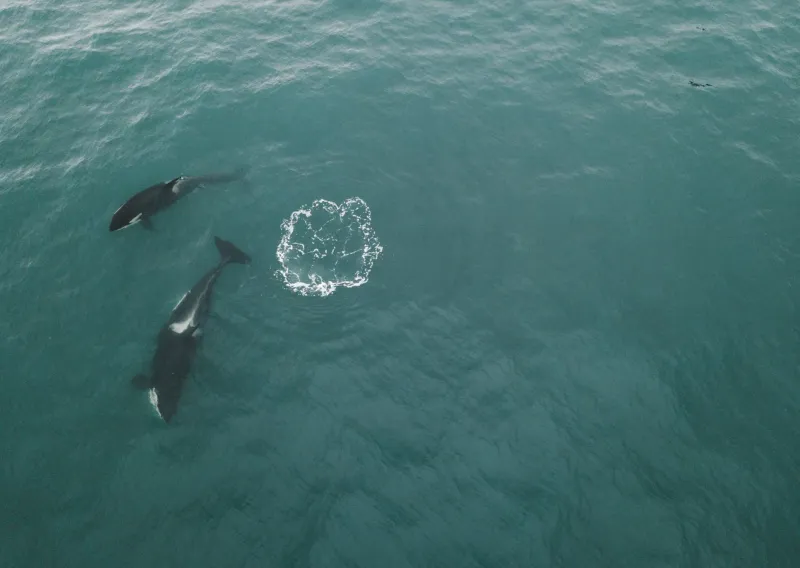
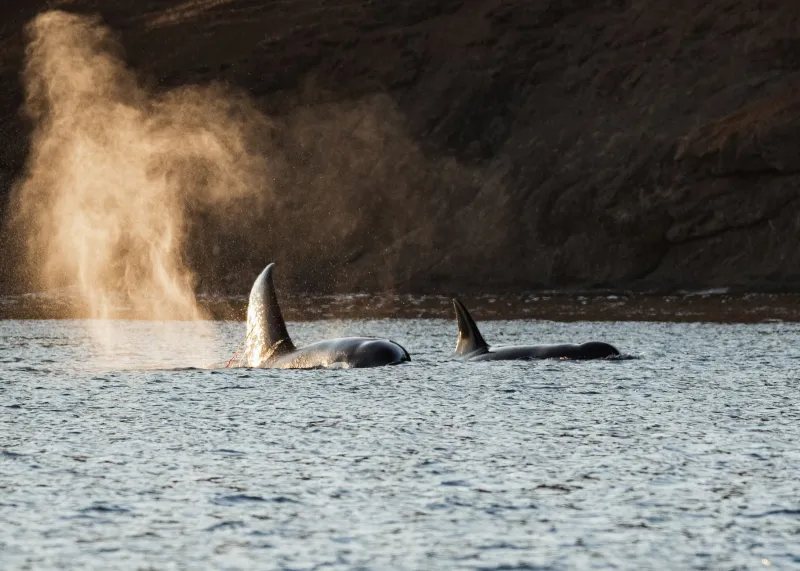
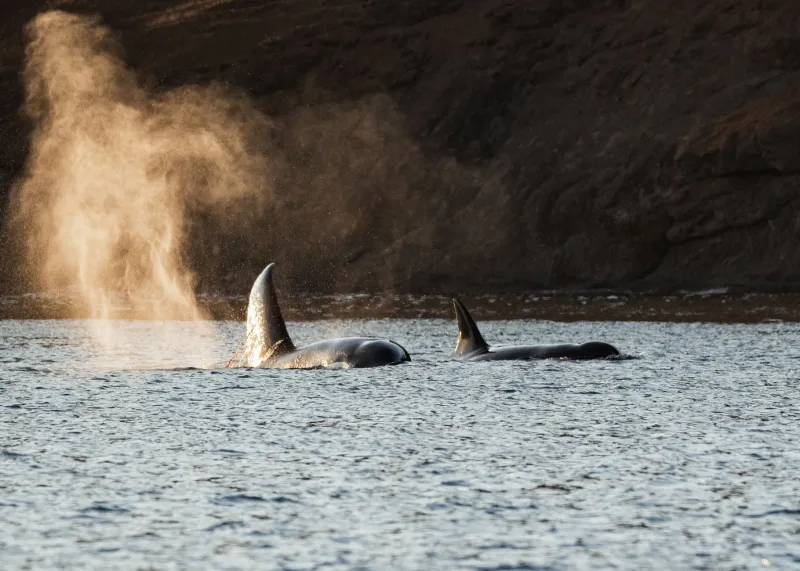
When most Americans think about the threats facing Southern Resident killer whales, they picture a straightforward narrative: not enough Chinook salmon to eat, too many boats crowding their foraging grounds, too much underwater noise disrupting their ability to hunt and communicate. These are real and urgent problems, and this publication has documented them at length. But there is another threat operating quietly in the background — one that receives far less public attention and yet may be accelerating the Southern Residents' decline in ways that are only beginning to be fully understood.
That threat is chemical contamination, and its primary weapon is immunosuppression.
A Body Burden Decades in the Making
The Southern Residents occupy the apex of a marine food web that has been absorbing industrial pollutants for the better part of a century. Polychlorinated biphenyls, or PCBs, were manufactured and widely used across the United States from the 1930s until their federal ban in 1979. Polybrominated diphenyl ethers, or PBDEs, served as flame retardants in consumer products for decades before regulatory agencies began restricting their use. Organochlorine pesticides, including the notorious DDT and its breakdown products, entered Pacific Northwest waterways through agricultural runoff and aerial spraying programs that persisted long after the ecological consequences became apparent.
All of these compounds share a critical characteristic: they are lipophilic, meaning they dissolve readily in fat rather than water. In a marine mammal that carries enormous blubber reserves and depends on a diet of fatty Chinook salmon, that property becomes catastrophic. Each contaminated fish a Southern Resident consumes adds incrementally to a chemical burden stored in blubber, organs, and nervous tissue. Because these animals sit at the top of the food chain, they experience biomagnification — the concentration of pollutants multiplies dramatically at each trophic level, so that the whale absorbs far more toxic load than the fish it eats, which absorbed far more than the smaller fish it consumed, and so on down the chain.
Researchers studying Southern Resident blubber samples have documented some of the highest PCB concentrations ever recorded in free-ranging cetaceans. These are not trace exposures. These are tissue burdens that exceed known toxicological thresholds by significant margins.
What Contamination Does to an Immune System
The immunological consequences of chronic PCB and PBDE exposure are not speculative. Laboratory and field studies conducted across multiple cetacean species have established a consistent pattern: high contaminant loads correlate with measurable suppression of immune cell function, reduced antibody production, diminished natural killer cell activity, and impaired response to novel pathogens.
For the Southern Residents, this means that an animal already stressed by food scarcity and acoustic disruption is simultaneously operating with a compromised biological defense system. Infections that a well-nourished, chemically unburned killer whale might resolve without consequence can become life-threatening in a Southern Resident whose immune architecture has been chronically undermined.
This is not a theoretical concern. Stranded and deceased Southern Residents have been found with evidence of bacterial and fungal infections, skin lesions, and respiratory disease at rates that concern marine mammal veterinarians. While cause of death in wild cetaceans is notoriously difficult to establish with certainty, the pattern is consistent with what immunotoxicology predicts: a population whose immune defenses have been eroded by chemical exposure will be disproportionately vulnerable to opportunistic disease.
The Maternal Transfer Problem
Perhaps the most devastating dimension of this crisis is the mechanism by which contamination passes from one generation to the next. Female killer whales mobilize their blubber reserves during pregnancy and lactation, and in doing so, they transfer a substantial portion of their accumulated contaminant burden directly to their calves through the placenta and, subsequently, through their fat-rich milk.
A first-born calf receives the heaviest dose, because the mother has had no prior opportunity to offload her chemical burden through reproduction. Studies of other long-lived cetacean species suggest that first-born calves can carry contaminant concentrations comparable to or exceeding those of their mothers. For Southern Resident calves — already arriving into a world with insufficient prey and chronic acoustic stress — this chemical inheritance represents an additional and profound disadvantage from the moment of birth.
The reproductive implications compound the tragedy. Calves born with suppressed immune function are less likely to survive their first year. The Southern Residents' calf mortality rate is already alarmingly high, and while prey scarcity is frequently cited as the primary driver, immunotoxic contamination almost certainly contributes to outcomes that might otherwise have been survivable.
Emerging Contaminants: The Next Wave
Legacy pollutants like PCBs and DDT represent a burden inherited from the industrial decisions of previous generations. But the chemical environment facing the Southern Residents is not static. Emerging contaminants — compounds that have entered widespread use more recently and whose ecological effects are still being characterized — are accumulating in Salish Sea food webs alongside their predecessors.
Per- and polyfluoroalkyl substances, collectively known as PFAS, have been detected in marine mammals across the Pacific Northwest. These compounds, used in everything from nonstick cookware to firefighting foam, are extraordinarily persistent and have been associated with immune disruption in both laboratory models and wildlife populations. Microplastics, which absorb and concentrate hydrophobic pollutants before entering the food web, represent another emerging vector of chemical exposure. Pharmaceutical compounds, personal care product chemicals, and a host of industrial byproducts round out a complex and still-evolving toxic landscape.
Regulatory frameworks have struggled to keep pace with this proliferation. The Toxic Substances Control Act, even as reformed by the Frank R. Lautenberg Chemical Safety for the 21st Century Act in 2016, remains inadequate to the task of evaluating and restricting the thousands of synthetic compounds currently in commercial use. For a population as critically endangered as the Southern Residents, the cumulative burden of both legacy and emerging contaminants represents a systemic policy failure as much as a biological one.
Connecting the Dots That Policy Has Refused to Connect
What makes the immunotoxic dimension of Southern Resident decline so politically inconvenient is that it implicates not a single industry or a single regulatory gap, but an entire framework of industrial production and chemical governance that has prioritized commercial utility over ecological consequence for generations.
Addressing food scarcity requires dam removal and salmon recovery — difficult, expensive, politically contentious, but at least conceptually bounded. Addressing acoustic pollution requires vessel speed restrictions and noise standards — again, contested, but tractable. Addressing the chemical siege on the Southern Residents' immune systems requires confronting the legacy of industrial contamination across an entire watershed, accelerating the cleanup of Superfund sites that have languished for decades, restricting emerging contaminants before their harms become irreversible, and fundamentally rethinking how the United States evaluates and regulates synthetic chemicals.
That is a far larger and more uncomfortable conversation. It is also, the science increasingly suggests, an unavoidable one.
The Southern Residents cannot wait for policy to catch up to biology. Their tissues are already saturated with the consequences of decisions made before most living Americans were born, and new chemical stressors are entering their environment every year. Protecting these whales demands that we name every vector of their decline with precision and urgency — including the ones that are invisible to the naked eye and inconvenient to the political imagination.
The immune system failing inside each Southern Resident is not an abstraction. It is a measurable, documented consequence of choices this society has made and continues to make. Reversing that trajectory begins with refusing to look away from what the chemistry is telling us.