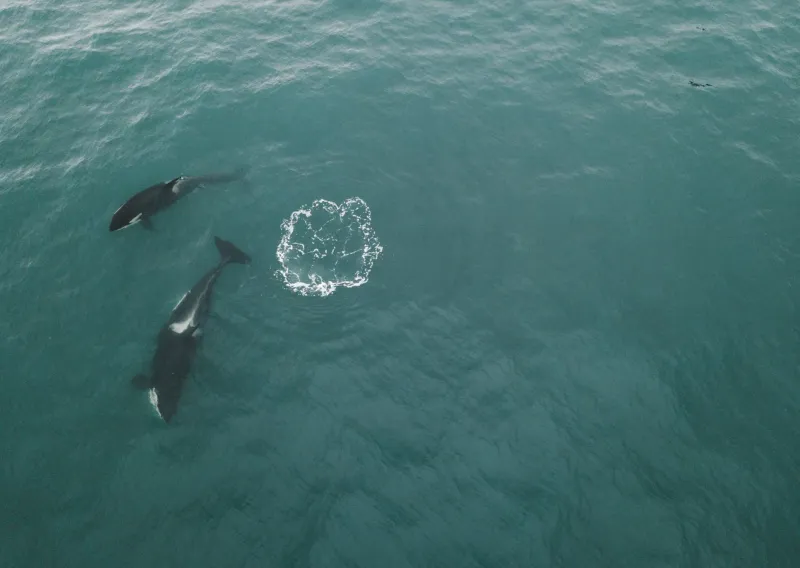
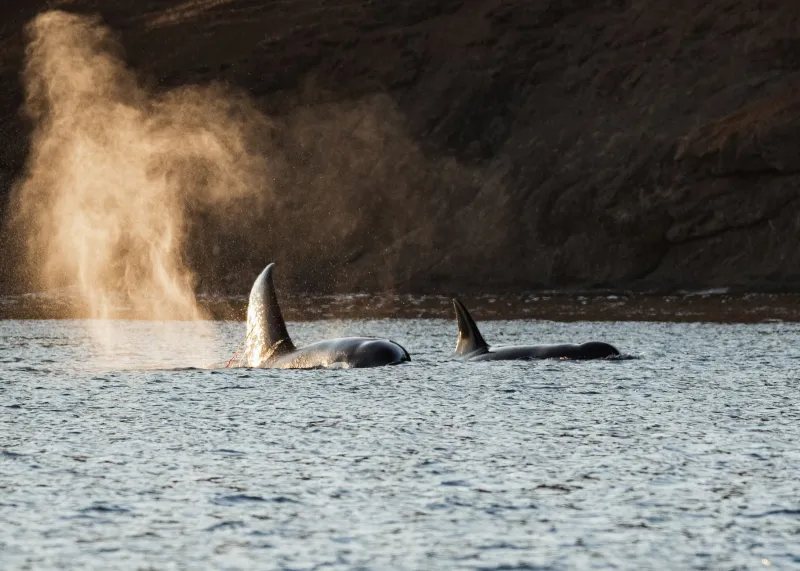
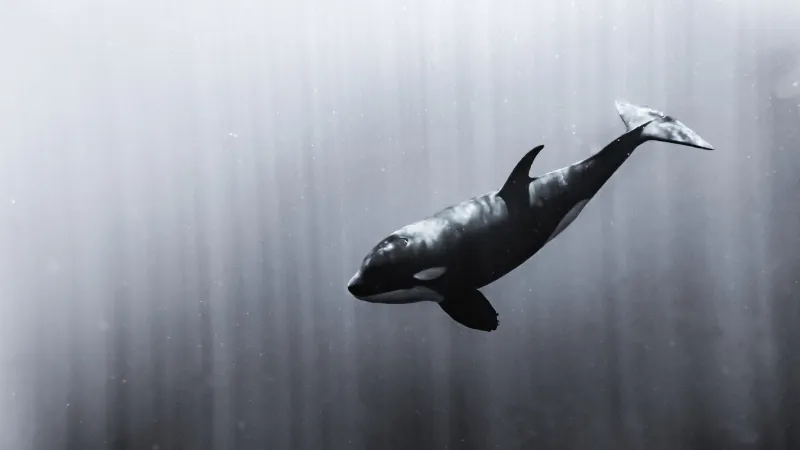
One Whale's Hunger Strike: What J32's Final Days Reveal About Breaking Points in a Population Under Siege
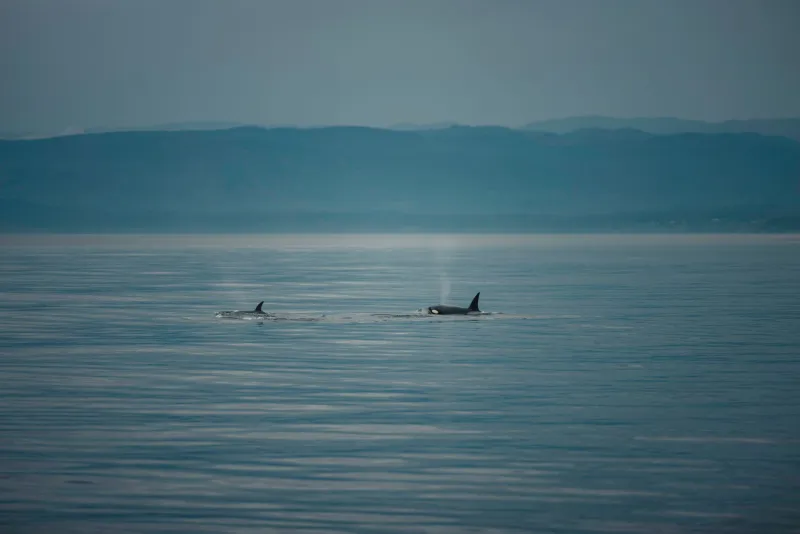
A Death That Demanded More Than a Necropsy
When J32, the Southern Resident killer whale known to researchers as Rhapsody, stranded on a British Columbia beach in December 2014, the immediate cause of death was not difficult to identify. She was emaciated. Her blubber reserves were critically depleted. She had been carrying a near-term calf that did not survive. But the question that lingered — and that has never been fully resolved — was not simply how she died. It was why, at roughly eighteen years of age and in what should have been the prime of her reproductive life, a whale embedded in a tight-knit social network had apparently ceased making the effort to sustain herself.
That question sits at the uncomfortable intersection of physiology, ecology, and animal psychology. It is a question that the scientific community has approached carefully, and one that conservation advocates can no longer afford to sidestep.
What "Failure to Feed" Actually Means
In Southern Resident research circles, the phrase "failure to feed" carries clinical weight. Biologists use it to describe documented instances in which individual whales, observed over extended periods, show markedly reduced foraging behavior — fewer dives, less time in known feeding areas, diminished prey pursuit — relative to their pod members and their own historical baselines.
This is not the same as a whale that simply fails to find food in a depleted environment, though food scarcity is almost always a contributing factor. The distinction matters enormously. A whale that cannot locate Chinook salmon because there are too few in the water column is experiencing ecological deprivation. A whale that appears to stop attempting to locate food — that withdraws from foraging even when others in its group are actively hunting — is exhibiting something that researchers have described, with appropriate scientific caution, as behavioral collapse.
J32 is not the only Southern Resident to have shown signs consistent with this pattern. Documented observations of underweight and visibly declining individuals across J, K, and L pods reveal a recurring profile: social withdrawal, reduced surface activity, and diminished participation in the coordinated, cooperative foraging strategies that define Southern Resident hunting culture. These are not random data points. They are a pattern.
The Cumulative Burden No Single Stressor Can Explain
To understand what may drive a Southern Resident whale to stop feeding, it is necessary to understand the cumulative physiological and psychological load these animals carry — a load that has intensified with each passing decade.
Chinook salmon, the primary prey of Southern Residents, have declined catastrophically across the Pacific Northwest due to dam obstruction, habitat loss, and decades of overfishing. The whales must now travel farther, dive deeper, and expend more energy to secure fewer calories. For a gestating female like J32, the caloric math becomes brutally unforgiving: pregnancy imposes enormous metabolic demands at precisely the moment when prey availability may be at its lowest.
Layered onto nutritional stress is a toxic burden that researchers have characterized as among the highest recorded in any marine mammal population. Polychlorinated biphenyls, or PCBs, accumulate in the blubber that Southern Residents rely on as an energy reserve. When a whale begins drawing on those reserves — as any nutritionally stressed animal must — it mobilizes not just calories but a concentrated release of neurotoxic and immunosuppressive compounds into the bloodstream. The physiological consequences of this process, sometimes called "blubber mobilization toxicity," include endocrine disruption, immune suppression, and neurological effects that researchers believe may impair cognition and behavioral regulation.
And then there is noise. The Salish Sea is among the most acoustically degraded marine environments on the Pacific Coast. Vessel traffic, sonar, and industrial activity produce chronic noise pollution that interferes with the echolocation Southern Residents use to hunt. A whale that cannot hear its prey clearly is a whale that must work harder for every meal — and may, under sufficient cumulative stress, reach a point where the effort no longer registers as worthwhile.
When Biology Meets Psychology
The scientific literature on animal trauma and learned helplessness offers a framework that, while developed largely in terrestrial species, may have genuine relevance here. When an organism repeatedly experiences aversive conditions over which it has no control — food scarcity it cannot resolve, noise it cannot escape, toxins it cannot expel — it can undergo neurological changes that reduce goal-directed behavior. The animal does not simply give up in a human sense. Rather, the neural architecture of motivation and reward is gradually restructured by chronic stress in ways that diminish the drive to seek relief.
Applying this framework to Southern Residents requires care. These are complex, long-lived animals with sophisticated social structures, and the science of cetacean psychology remains an active and evolving field. But the behavioral observations are difficult to dismiss. Whales like J32 existed within pods that were themselves under extreme stress — pods that had experienced the deaths of key social figures, that were nutritionally compromised, and that were navigating an environment growing steadily more hostile. To treat her apparent failure to feed as a purely mechanical physiological event is to ignore the social and cognitive context in which it occurred.
What Individual Cases Demand of Conservation Policy
The dominant frameworks for Southern Resident conservation have necessarily focused on population-level metrics: total abundance, reproductive rates, prey availability indices, vessel proximity regulations. These frameworks are scientifically defensible and politically necessary. But J32's case illustrates a gap that population-level thinking struggles to address.
If individual whales can reach physiological and behavioral breaking points that are not predicted by population averages — if the cumulative burden of starvation, toxicity, noise, and social loss can push a single animal past a threshold of recovery before the broader population shows measurable decline — then conservation science needs tools sensitive enough to detect and respond to individual deterioration before it becomes irreversible.
This means sustained investment in health monitoring programs capable of tracking body condition, hormone levels, and behavioral baselines for identified individuals over time. It means recognizing that the death of a reproductive-age female is not merely a demographic loss — it is the erasure of a specific animal with a specific history, a specific social role, and a specific accumulation of stressors that may have been building for years before she stranded on that beach.
The Population Is Made of Individuals
There are approximately seventy-three Southern Resident killer whales alive as of the most recent census. Each of them is known. Each has a name, a designation, a documented family history, and a life that researchers have followed across seasons and years. That intimacy of knowledge is one of the great scientific assets of Southern Resident conservation — and it carries an obligation.
J32 did not represent a statistical event. She was a specific whale, carrying a specific calf, navigating a specific set of impossible conditions. Her story does not replace the urgent need for systemic change — dam removal, salmon recovery, PCB remediation, vessel regulation. But it insists that systemic change be understood as the sum of individual lives it is trying to protect.
The Salish Sea is losing whales one by one. Understanding how and why each one breaks is not a sentimental exercise. It is science. And it may be the most honest measure we have of how close to the edge this population truly stands.