Eyes on the Water: How Ordinary Americans Are Rewriting Southern Resident Science
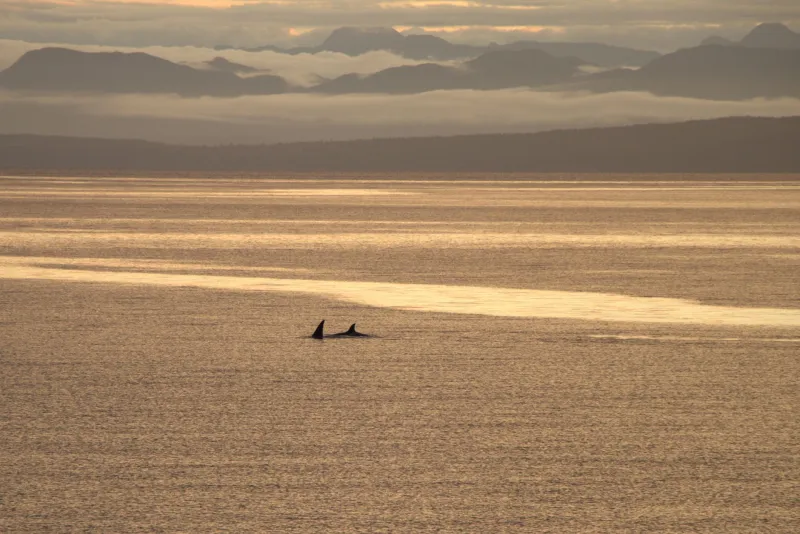
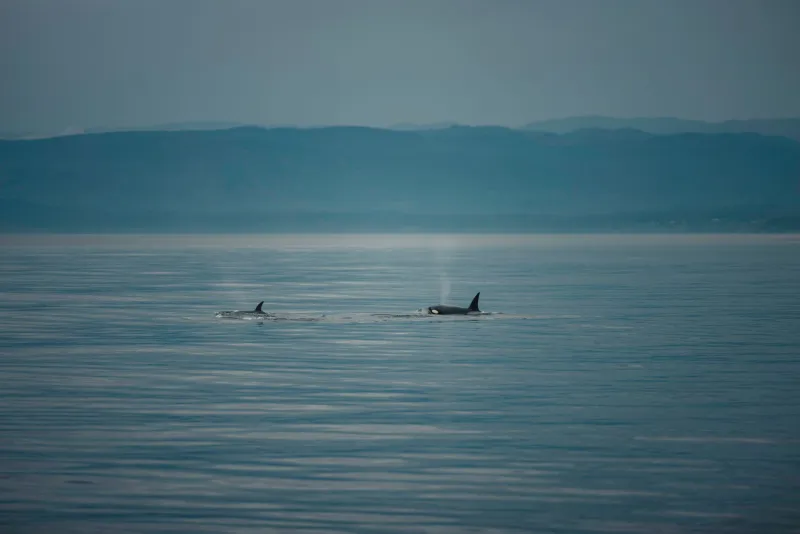
On a gray October morning near Lime Kiln Point State Park on San Juan Island, a retired schoolteacher named Margaret Holloway stands at the water's edge with a pair of Fujinon binoculars and a laminated field sheet. She has been here for two hours already, logging wind speed, vessel traffic, and surface behavior. When a dorsal fin breaks the chop roughly 400 meters offshore, she reaches for her camera with practiced efficiency. She is not a marine biologist. She has never published a peer-reviewed paper. But the data she collects today will enter a research database that professional scientists consult regularly—and it may help determine whether a critically endangered population of killer whales survives the next decade.
Margaret is one of hundreds of volunteers embedded in structured citizen science programs operating throughout the Pacific Northwest. Together, they form a distributed monitoring network that has become indispensable to Southern Resident killer whale research. Understanding how that network functions—and why it matters—requires looking carefully at what these volunteers are actually doing and what the scientific community has learned from them.
The Limits of Professional Monitoring
The Southern Residents are among the most studied cetaceans on Earth, yet significant observational gaps persist. Research vessels are expensive to operate, grant cycles are unpredictable, and even the most well-funded field teams cannot maintain continuous presence across the whales' vast seasonal range. The three pods—J, K, and L—collectively range from the inland waters of Washington State and British Columbia to the open Pacific coast as far south as Monterey Bay, California. No single institution has the resources to track them comprehensively.
Citizen science programs were designed, in part, to address exactly this constraint. Organizations such as the Orca Behavior Institute, Orca Network, and the Center for Whale Research have developed formal volunteer protocols that transform casual observers into reliable data collectors. The key word is structured. These are not programs that simply ask members of the public to report whale sightings on a smartphone app. Volunteers receive training in identification techniques, behavioral notation, and data entry standards. They learn to distinguish a breach from a spy-hop, to recognize individual whales by dorsal fin shape and saddle patch markings, and to record vessel proximity in standardized formats that allow for statistical comparison across thousands of observation hours.
What the Volunteers Are Actually Collecting
The data flowing from citizen observers spans several categories, each with distinct scientific value.
Behavioral documentation forms the core of most volunteer contributions. Trained observers record surface behaviors—foraging, socializing, resting, traveling—along with the frequency and duration of each. Over time, these records reveal patterns that researchers use to assess pod health and stress levels. A statistically significant decline in foraging behavior in a particular area, for instance, can signal prey scarcity before formal prey surveys confirm it.
Vessel interaction data has proven particularly consequential. Citizen scientists stationed at fixed shoreline points, such as Lime Kiln Lighthouse on San Juan Island, can log every vessel within a defined radius while simultaneously recording whale behavior. This simultaneous, co-located documentation is difficult to replicate from a research boat, which is itself a vessel in the data. Shoreline volunteers occupy a unique vantage point—literally outside the system they are observing. Analysis of volunteer-collected vessel logs contributed to the empirical case for Washington State's enhanced vessel distance regulations, demonstrating measurable behavioral disruption at distances closer than 300 yards.
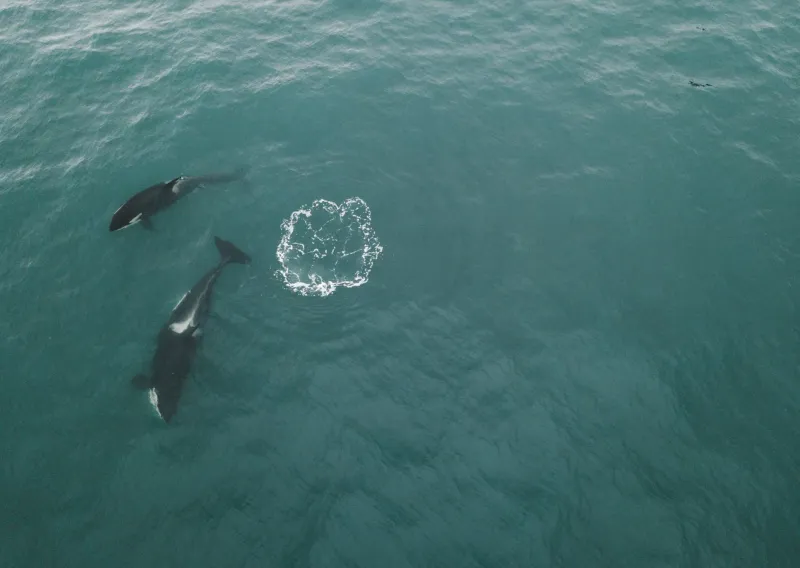
Photographic identification is perhaps the most technically demanding volunteer contribution. The Center for Whale Research maintains a long-term catalog of every known Southern Resident individual, a project that depends heavily on high-quality photographs submitted by trained volunteers. When a new calf is born or an individual is found to be missing, community-sourced images often provide the first documentation. In several documented cases, volunteers photographed whales exhibiting physical symptoms—rake marks, unusual body condition, skin lesions—that prompted targeted research follow-up.
When Grassroots Observation Leads Science
Perhaps the most compelling argument for citizen science programs is the frequency with which volunteer observations have preceded formal scientific discovery.
In the late 2010s, multiple volunteers monitoring from San Juan Island's western shore independently noted that Southern Resident foraging attempts in Haro Strait were increasingly unsuccessful—whales were diving repeatedly in areas historically associated with Chinook salmon without apparent prey capture. Their behavioral notes, cross-referenced with hydrophone data and formal prey surveys, contributed to a growing body of evidence that the acoustic environment was interfering with echolocation-based foraging. Researchers acknowledged that the density of shoreline observations made this pattern detectable at a resolution that vessel-based surveys alone would not have achieved.
Similarly, volunteers with Orca Network have documented behavioral anomalies in individual whales that later informed health assessments. Community observers are frequently the first to notice when a specific animal has not been seen for an extended period, triggering systematic searches and, in some cases, confirming mortality events. The speed of that notification matters: it determines whether researchers can respond while there is still an opportunity to collect biological samples.
The Training Pipeline
Building a reliable citizen science network requires sustained investment in volunteer education. The Orca Behavior Institute runs multi-day field intensives each summer that combine classroom instruction with supervised observation shifts. Participants learn the Southern Resident catalog—all 73 living individuals as of the most recent census—and practice real-time identification using reference materials developed from decades of professional fieldwork. Volunteers who complete the program are certified to contribute data to the institute's long-term behavioral database.
Other programs operate year-round through online platforms, allowing volunteers in California, Oregon, and inland Washington to contribute sighting reports when whales venture beyond their core Salish Sea range. These offshore observations are increasingly valuable as researchers attempt to understand how the Southern Residents use Pacific coastal habitat during winter months—a period that remains comparatively understudied.
Why This Matters for Policy
Citizen science is not merely an academic exercise. The data it generates enters the evidentiary record that informs regulatory decisions. When federal agencies review recovery plans under the Endangered Species Act, the quality and quantity of behavioral monitoring data directly affects the strength of proposed protections. A richer dataset means stronger arguments for meaningful intervention.
For the Southern Residents—a population that has declined to 73 individuals and faces simultaneous threats from prey depletion, acoustic disturbance, and toxic contamination—every credible data point is a potential policy lever. The volunteers standing on those shorelines with binoculars and field sheets are not peripheral to the conservation effort. They are, in a very real sense, the infrastructure on which evidence-based protection depends.
Margaret Holloway will be back at Lime Kiln Point next weekend. She will bring coffee, a fresh set of datasheets, and the same focused attention she has brought every month for the past six years. The whales may not know she is watching. But the science—and the policy that follows from it—increasingly depends on the fact that she is.