One Scientist's Obsession: How a Salmon Researcher Became the Southern Residents' Most Unlikely Champion
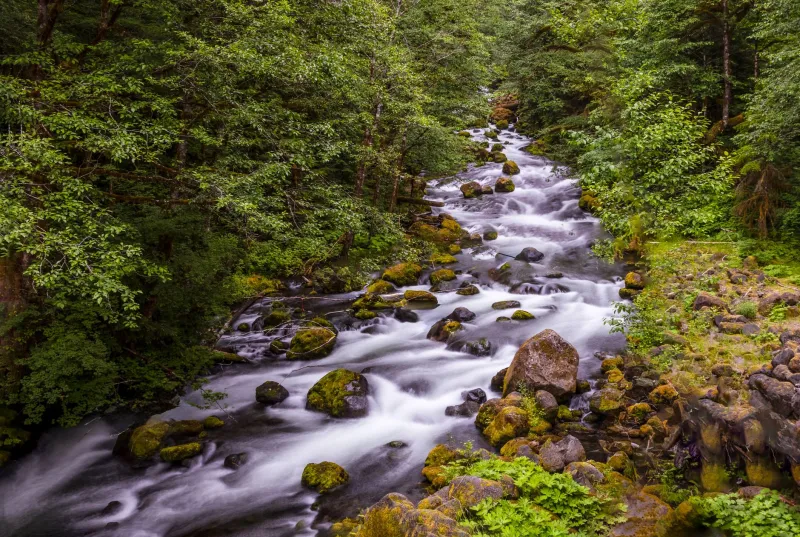
When Dr. Joseph Bogaard first waded into a degraded Pacific Northwest stream two decades ago, he was counting fish — not saving whales. Armed with a clipboard, chest waders, and a graduate student's unflinching optimism, he was cataloging the slow collapse of Chinook salmon runs across Washington State's river systems. Killer whales were, at that point, someone else's problem.
They are not anymore.
Today, Bogaard serves as executive director of the Puget Sound Salmon Recovery Council and is widely regarded as one of the most consequential — and at times polarizing — scientific voices in the fight to restore the Salish Sea's fractured food web. His pivot from salmon ecologist to Southern Resident advocate was not planned. It was, he says, inevitable.
"You cannot study Chinook decline in this region for very long before you realize you're also studying the slow starvation of an endangered whale population," he explained in a recent conversation. "The two crises are not parallel. They are the same crisis."
A Career Shaped by Cascading Collapse
Bogaard's transformation began in earnest around 2008, when population modeling he had developed for Chinook runs in the Skagit and Snohomish river systems was cross-referenced with Southern Resident foraging data collected by the Center for Whale Research. The overlap was striking. Years when Chinook abundance dropped sharply corresponded with documented periods of nutritional stress among J, K, and L pods — observable in the "peanut head" condition caused by fat loss behind the skull, in failed pregnancies, and in elevated mortality rates.
"That correlation wasn't new information exactly," Bogaard acknowledged. "But seeing it mapped together, quantitatively, with my own salmon data on one axis and whale health metrics on the other — that changed something for me professionally and personally."
He began collaborating with marine mammal researchers, attending killer whale recovery workshops, and eventually restructuring his organization's advocacy priorities to explicitly link salmon restoration with Southern Resident survival. The move was not without friction. Some colleagues in the fisheries science community felt it muddied disciplinary boundaries. Others worried that tying salmon recovery to charismatic megafauna would distort funding priorities and policy conversations.
Bogaard remains unapologetic. "If the Southern Residents are the most visible consequence of salmon collapse, then using that visibility to drive policy is not a distortion — it's leverage."
The Projects Redefining What Restoration Looks Like
Over the past decade, Bogaard's council has spearheaded several restoration initiatives that depart significantly from conventional salmon recovery orthodoxy.
The most ambitious involves large-scale floodplain reconnection along tributaries of the Skagit River — one of the few remaining river systems in Washington capable of supporting substantial wild Chinook runs. Rather than focusing narrowly on fish passage at specific barriers, the project aims to restore the lateral complexity of river corridors: reintroducing beaver activity, removing agricultural levees where landowner agreements allow, and reestablishing riparian vegetation that regulates water temperature and provides insect biomass for juvenile salmon.
"We spent thirty years doing restoration as a series of isolated engineering projects," Bogaard said. "A culvert here, a hatchery there. What we were missing was the system. Chinook don't just need water to swim through. They need a functioning watershed."
A second initiative, developed in partnership with several Coast Salish tribal nations, focuses on integrating Indigenous ecological knowledge into restoration site selection and monitoring protocols. Tribal members have contributed observations of historical salmon abundance, spawning behavior, and habitat conditions that predate scientific record-keeping by generations — information that has, in multiple cases, redirected restoration resources toward sites that conventional surveys had ranked as lower priority.
"That collaboration has made our science better," Bogaard said flatly. "Not as a political gesture. As a matter of accuracy."
The Political Terrain Is as Treacherous as the Science
For all the innovation embedded in his restoration work, Bogaard is candid about the structural obstacles that dwarf any individual project's impact. Chief among them: the political resistance to meaningful dam removal on the Snake River, whose four lower dams block access to some of the most productive wild salmon habitat remaining in the interior Pacific Northwest.
The science on this point is, in Bogaard's view, unambiguous. Removing those dams would restore access to hundreds of miles of spawning habitat and could meaningfully increase Chinook abundance available to Southern Residents within a decade. The Biden administration moved toward removal; the political landscape has since shifted again, leaving the question suspended in a familiar cycle of study, litigation, and legislative maneuvering.
"We have spent more money studying whether to remove those dams than it would cost to begin the process," Bogaard said, with a measured frustration that suggests he has delivered this line many times before. "At some point, delay is itself a policy choice — and it's a choice that costs lives. Whale lives and fish lives."
He is equally critical of the continued expansion of net-pen salmon aquaculture in Puget Sound, which he argues introduces disease pressure and competition that further suppresses wild Chinook recovery. His public opposition to several proposed aquaculture permits has generated pushback from industry groups and some state legislators who frame fish farming as a component of regional food security.
"Wild salmon recovery and industrial aquaculture expansion are not compatible goals in this ecosystem," he said. "We need to be willing to say that clearly, even when it's inconvenient."
What Success Actually Looks Like
Perhaps the most striking aspect of Bogaard's advocacy is his insistence on defining what victory would concretely mean — a discipline that forces uncomfortable honesty about how far the region remains from achieving it.
By his own modeling, stabilizing Southern Resident population decline would require a sustained increase in Chinook biomass available within the whales' core foraging range of roughly 15 to 30 percent above current levels. Achieving that within the next decade would require simultaneous progress on dam removal, habitat restoration, hatchery reform, and vessel disturbance reduction — a convergence of policy outcomes that has never previously been achieved.
"I'm not going to tell you it's easy or that we're close," he said. "What I will tell you is that we know what needs to happen. The science is not the limiting factor. The will is."
For the Southern Residents — currently numbering fewer than 75 individuals — the margin for delay is vanishingly thin. Bogaard knows this. It is, he says, precisely why a salmon scientist who once measured fish with a clipboard now spends a substantial portion of his time testifying before state legislatures, briefing federal agency staff, and making the case, repeatedly, that the fate of an endangered whale population is inseparable from the rivers we have spent a century dismantling.
"These whales are the most visible indicator of whether this ecosystem functions," he said. "If we cannot feed them, we have failed at everything else we claim to be doing."
The fish are still the center of his science. But the whales, it turns out, are why it matters.