Against the Odds: How J Pod's Quiet Resurgence Is Challenging What We Thought We Knew About Southern Resident Recovery
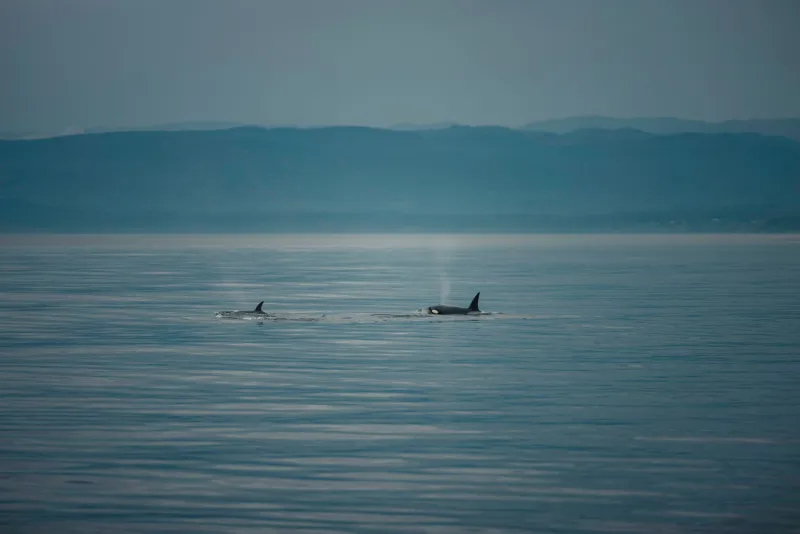
The prevailing story of Southern Resident killer whales is one of attrition. Population counts hover near historic lows. Calf mortality rates remain alarming. Prey scarcity, acoustic pollution, and toxic contamination continue to press against a population that can absorb very little additional pressure. Given this landscape, it would be reasonable to conclude that the trajectory is fixed—that the arc of Southern Resident history bends, inexorably, toward extinction.
But within that larger story, a quieter and more complicated chapter is being written. J Pod, the most frequently observed of the three Southern Resident pods, has produced a cluster of reproductive events and behavioral patterns over recent years that scientists describe with a careful optimism they rarely allow themselves. It is not a reversal of fortune. It is not a recovery. But it is something—and that something deserves far more attention than it has received.
What the Numbers Actually Show
J Pod is the most studied group of wild killer whales on the planet. Decades of photographic identification, acoustic monitoring, and behavioral observation have produced a longitudinal dataset that researchers in other fields can only envy. That depth of record is precisely what makes recent trends legible—and significant.
In the span of a few years, J Pod has welcomed multiple calves who have survived past the critical first year threshold, a period during which Southern Resident newborns face their highest mortality risk. Historically, roughly one in four Southern Resident calves does not survive its first twelve months. When calves do persist beyond that window, the population gains not just a number but a future—a potential reproductive contributor, a carrier of cultural knowledge, a node in the intricate social web that defines this community.
Researchers tracking J Pod have noted that several of these surviving young animals appear to be feeding successfully, displaying the surfacing behaviors and body condition scores associated with adequate prey intake. That observation, modest as it sounds, carries enormous weight in a population chronically compromised by Chinook salmon scarcity.
The Conditions Behind the Trend
Scientists are careful to resist overstating what they observe. Correlation is not causation, and a cluster of positive outcomes in a small population can reflect statistical variance as much as genuine ecological improvement. Still, several converging factors appear to be contributing to J Pod's relative stability, and each one offers a lesson for broader recovery strategy.
First, J Pod has historically made more flexible use of its foraging range than K or L Pod, at times extending its movements into areas where Chinook availability has been comparatively higher during certain seasons. This behavioral plasticity—a willingness to depart from traditional routes when prey demands it—may be conferring a modest but meaningful nutritional advantage. Whether that flexibility is culturally transmitted, individually learned, or some combination of both remains an open research question, but it points toward the importance of preserving the social structures through which adaptive behaviors propagate.
Second, the presence of experienced reproductive females within J Pod has likely played a stabilizing role. Older females in Southern Resident society are not merely passive members of their pods; they are active foraging leaders whose ecological knowledge guides younger animals toward prey. The retention of these matriarchs within J Pod has maintained a knowledge infrastructure that younger animals can draw upon—a living archive of survival strategy that no conservation technology can replicate.
Third, and perhaps most provocatively, some researchers have suggested that periods of reduced vessel traffic in J Pod's core range—whether due to regulatory changes, economic disruption, or seasonal variation in whale-watching activity—may have corresponded with reduced acoustic interference during foraging. The hypothesis remains contested and difficult to isolate from other variables, but it aligns with a growing body of evidence that acoustic disturbance meaningfully degrades Southern Resident foraging efficiency.
What This Means for Policy
The significance of J Pod's fragile upturn is not sentimental. It is instructive. If specific, identifiable conditions are enabling better outcomes within one pod, then the policy question becomes whether those conditions can be deliberately engineered across a wider range.
On the prey front, the answer is partially yes—and the tools are known. Accelerating dam removal on key Chinook-producing river systems in the Pacific Northwest would expand the spawning habitat available to the salmon runs on which Southern Residents depend. Reforming hatchery practices to prioritize wild salmon recovery over short-term harvest targets would improve the nutritional quality of available prey. These interventions require political will and the navigation of competing economic interests, but they are not scientifically uncertain. The evidence base is robust.
On the acoustic front, the policy pathway is more contested but no less urgent. Expanding vessel-free zones in critical foraging areas, enforcing existing approach regulations more rigorously, and incentivizing the adoption of quieter marine technologies by commercial and recreational operators would each reduce the acoustic burden that Southern Residents carry during every foraging attempt. The regulatory frameworks to enable these changes exist, in embryonic form, at both the federal and state level. What they lack is consistent enforcement and adequate funding.
On the social structure front, the policy implication is perhaps the most counterintuitive: do less harm to the individuals who are already succeeding. Protecting J Pod's reproductive females and experienced foragers from vessel strikes, entanglement, and contaminant exposure is not a passive strategy—it is an active investment in the knowledge networks that make adaptive behavior possible.
The Danger of a Single Story
There is a particular risk in highlighting J Pod's relative resilience in the current media environment. Conservation narratives are vulnerable to a kind of false resolution—the tendency for a story of partial progress to be received as evidence that the larger problem is resolving itself. It is not. The Southern Resident population remains critically endangered. K and L Pod face challenges that J Pod's modest upturn does nothing to address. The structural drivers of the crisis—prey depletion, toxic contamination, acoustic disruption, and habitat degradation—remain largely intact.
What J Pod's story offers is not reassurance. It is a proof of concept. It demonstrates that the conditions for better outcomes are not purely theoretical, that resilience is not entirely foreclosed, and that the choices made by policymakers, regulators, and the public have measurable consequences for individual animals and their families.
That is a different kind of story than the one most often told about Southern Residents. It is harder to tell because it resists both despair and premature celebration. But it may be the most important story in Southern Resident science right now—because it suggests that the extinction timeline is not, in fact, written in stone.
The Work That Remains
J Pod's quiet resurgence will mean nothing if the broader policy environment does not shift. Every calf born into a population still burdened by inadequate salmon runs, pervasive chemical contamination, and relentless acoustic pressure faces a gauntlet that no amount of biological resilience can fully overcome. The micro-victories accumulating within J Pod are real, but they are fragile—contingent on conditions that could deteriorate as quickly as they have, in some respects, improved.
The scientists studying these animals are not declaring success. They are identifying signals. The obligation of those who hear those signals—advocates, policymakers, and the American public—is to act on them before they fade.