Lessons From the Ledge: What Five Recovered Species Teach Us About Pulling Southern Residents Back From Extinction
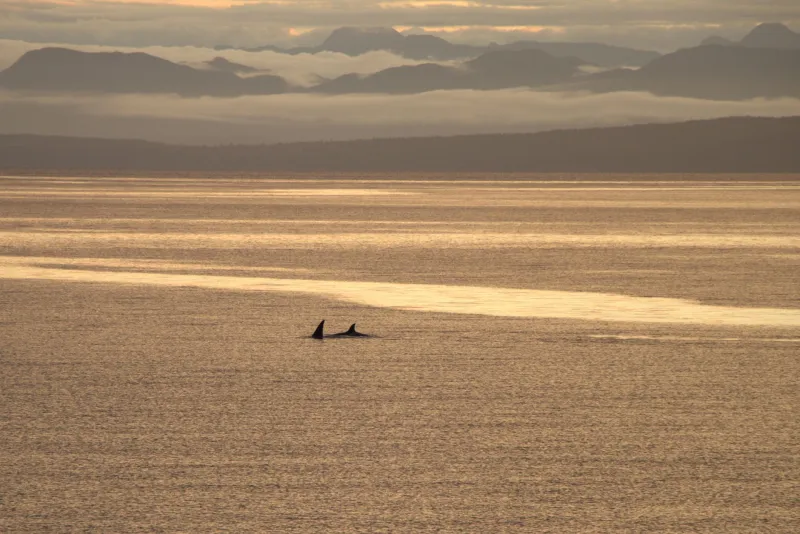
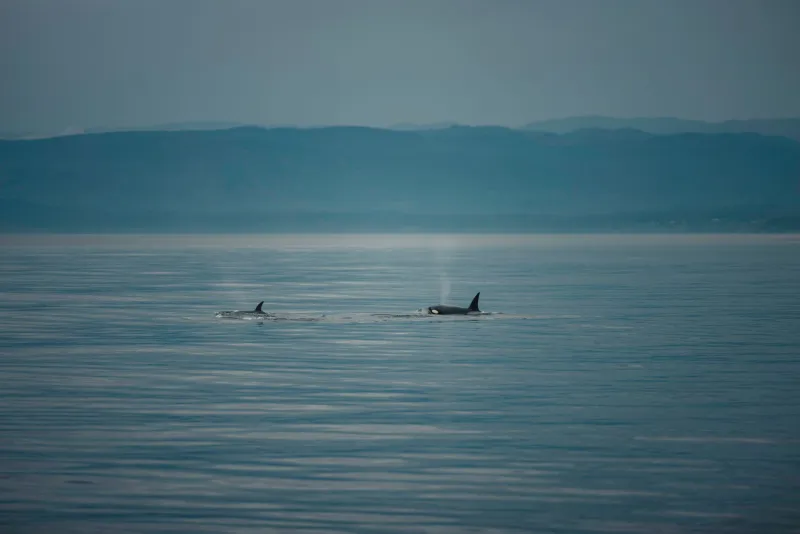
The Southern Resident killer whale population currently stands at 73 individuals. That number is not a stable plateau—it is the latest reading on a decades-long descent. Yet extinction, for all its terrible momentum, is not always irreversible. A small but instructive body of evidence drawn from conservation biology demonstrates that populations reduced to single digits or low double figures have, under the right conditions, rebounded. Each of those recoveries required something the Southern Residents still lack: coordinated, adequately funded, and politically sustained intervention. The question is whether the lessons embedded in those stories can be translated into action before the window closes.
The Arabian Oryx: Extinction in the Wild Is Not the End
In 1972, the Arabian oryx (Oryx leucoryx) ceased to exist outside captivity. Hunting and habitat destruction had erased a wild population that once ranged across the Arabian Peninsula. What followed was one of the most carefully engineered recoveries in conservation history. A captive breeding program—initially anchored at the Phoenix Zoo in Arizona—preserved genetic diversity while diplomats and wildlife managers negotiated reintroduction agreements with Oman, Saudi Arabia, and the United Arab Emirates. By 2011, the species had been downlisted from Endangered to Vulnerable on the IUCN Red List. Wild populations now exceed 1,000 individuals.
The oryx recovery succeeded because it treated captive breeding not as a destination but as a bridge—a holding strategy deployed while the underlying threats were addressed. For Southern Residents, the parallel is instructive. Supplemental feeding trials and assisted reproductive research currently underway are sometimes dismissed as last-ditch technological fixes. The oryx story reframes them as legitimate interim tools, provided they are paired with simultaneous, aggressive restoration of the prey base and habitat those whales depend upon.
The California Condor: When a Species Needs Help It Cannot Ask For
In 1987, the last wild California condor (Gymnogyps californianus) was captured. The entire species—27 birds—lived in zoos. The decision to remove them from the wild was agonizing and deeply controversial, but it reflected a frank acknowledgment that the threats they faced in the wild, primarily lead poisoning from spent ammunition in carcasses, could not be mitigated fast enough to save a population that small.
Today, more than 500 condors exist, with over 300 flying free across California, Arizona, Utah, and Baja California. The recovery required banning lead ammunition in condor range states, a policy fight that took years and faced fierce opposition from hunting lobbies. It also required sustained federal funding, multi-agency coordination, and a willingness to treat the species' survival as a non-negotiable public priority.
For Southern Residents, the condor precedent carries two specific lessons. First, addressing the root cause of mortality—not just its symptoms—is the only path that produces lasting results. The condor did not recover because veterinarians became better at treating lead poisoning; it recovered because lead was removed from the equation. Southern Residents will not recover because researchers become better at documenting starvation; they will recover when Chinook salmon populations are restored to levels that can sustain a viable orca population. Second, politically difficult regulatory action—the kind that generates industry opposition—is often precisely the action that works.
The Humpback Whale: What a Moratorium Can Accomplish
By the mid-twentieth century, commercial whaling had reduced global humpback whale (Megaptera novaeangliae) populations by an estimated 90 percent. The 1986 International Whaling Commission moratorium on commercial whaling, combined with habitat protections in feeding and breeding grounds, produced a recovery that scientists describe as one of the great conservation successes of the modern era. Many humpback subpopulations have been removed from the Endangered Species List entirely.
The humpback recovery is a reminder that large, long-lived marine mammals can rebound—but only when the primary anthropogenic pressure driving their decline is removed at a structural level. Southern Residents were never hunted commercially in significant numbers; their crisis is one of prey depletion, acoustic disruption, and toxic contamination. The humpback precedent does not offer a direct blueprint, but it does confirm that the biology of recovery is possible. What has been lacking is the political architecture to enable it.
The Gray Wolf: Ecosystem Recovery Requires Apex Predators
The reintroduction of gray wolves (Canis lupus) to Yellowstone National Park beginning in 1995 has become a foundational case study in trophic cascades—the phenomenon by which the restoration of a keystone predator restructures an entire ecosystem. Wolf predation altered elk behavior, which allowed riparian vegetation to recover, which stabilized riverbanks, which improved water quality and salmon habitat downstream.
Southern Residents are themselves apex predators whose absence from a healthy, prey-rich ecosystem would constitute an ecological loss far exceeding the loss of 73 individual animals. The wolf reintroduction also demonstrated something politically significant: that federal agencies, when directed by clear statutory mandates and supported by scientific consensus, can implement controversial recovery actions over local opposition. The Endangered Species Act has that mandate. What has been inconsistent is the will to apply it at the scale the Southern Residents' crisis demands.
The Bald Eagle: Removing a Single Toxin Changed Everything
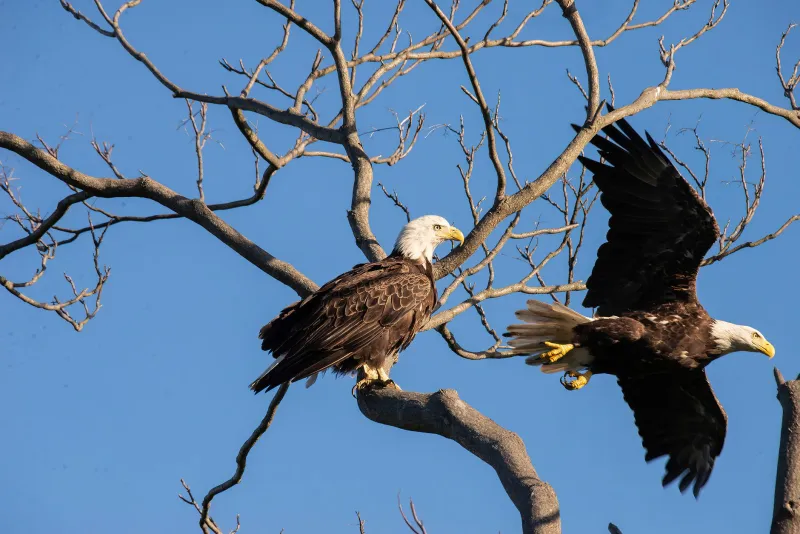
The bald eagle (Haliaeetus leucocephalus) was listed as endangered in 1967, its population devastated by the widespread use of DDT, which caused eggshell thinning and catastrophic reproductive failure. The 1972 federal ban on DDT—combined with Endangered Species Act protections and a successful captive breeding and release program—produced a recovery so complete that the species was delisted in 2007.
The chemical contamination burden carried by Southern Residents today—PCBs, PBDEs, legacy pesticides, and emerging contaminants—mirrors the DDT crisis in structural terms. Reproductive failure is a documented consequence in both cases. The eagle's recovery did not require eliminating every environmental stressor simultaneously; it required identifying the single most acute threat and eliminating it with regulatory force. Researchers consistently identify PCB load as among the most severe threats to Southern Resident reproductive success. The regulatory tools to accelerate source reduction and Superfund remediation in Puget Sound exist. They are not being applied with sufficient urgency.
The Synthesis: Five Variables That Predict Recovery
Across these five cases, a pattern emerges that is both encouraging and demanding. Recovery required: identification and removal of the primary mortality driver; sustained, multi-decade federal funding; cross-jurisdictional coordination; willingness to override short-term economic interests through regulatory action; and a public constituency invested in the outcome.
Southern Residents face not one primary driver but several operating simultaneously—prey scarcity, acoustic disruption, chemical contamination, and vessel pressure. That complexity makes their recovery harder than the condor's or the eagle's. But it does not make it impossible. What it requires is a recovery framework that addresses all of those drivers in parallel, funded at a level commensurate with the scale of the crisis, and insulated from the political cycles that have allowed incremental progress to substitute for transformational change.
The animals that came back from the ledge did not recover because conditions improved on their own. They recovered because people in positions of authority decided that recovery was worth the cost of the decisions required to achieve it. That decision remains unmade for the Southern Residents. The biology, as these five cases confirm, is not the obstacle.