Neighbors of the Deep: How Amateur Observers Are Quietly Transforming Southern Resident Science
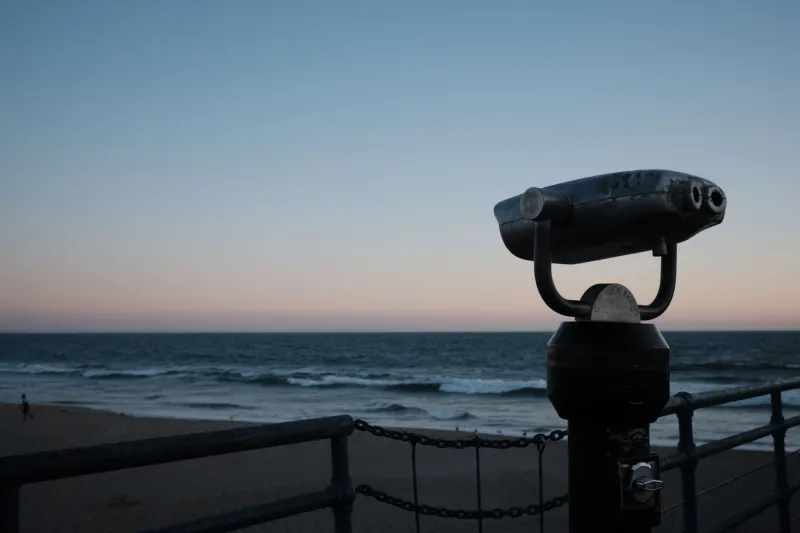
On a gray Tuesday morning in late October, a retired schoolteacher named Margaret sits at her kitchen table on San Juan Island, Washington, binoculars raised toward the water. She is not a marine biologist. She holds no advanced degree in cetacean behavior. Yet the spreadsheet open on her laptop beside a cooling cup of coffee contains more than four years of timestamped observations—dorsal fin photographs, surface behavior notations, acoustic event logs—that have been formally incorporated into peer-reviewed Southern Resident killer whale research.
Margaret is not an anomaly. She is part of a quietly expanding movement that is fundamentally altering the scientific landscape of Southern Resident conservation.
The Knowledge Gap That Professionals Cannot Fill
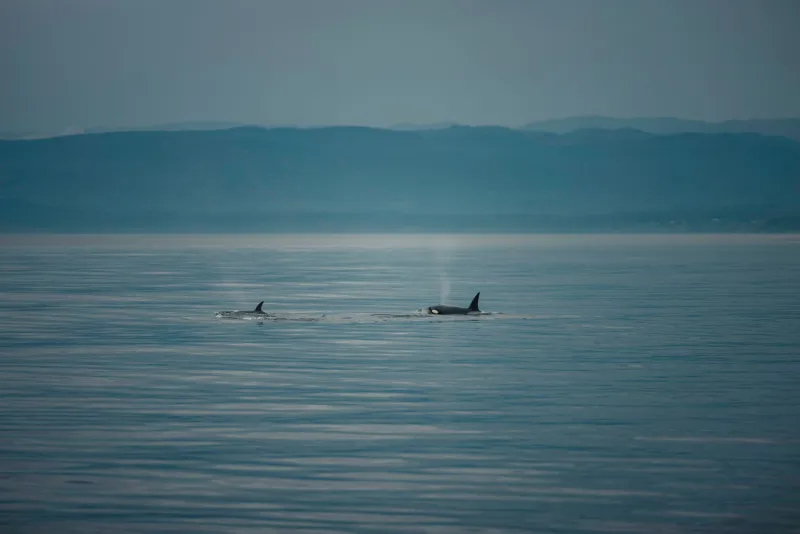
Professional researchers studying Southern Residents face an almost insurmountable logistical challenge: there are currently only 73 individual whales remaining across three pods—J, K, and L—and they range across a vast and often unpredictable geographic corridor stretching from the northern Salish Sea into California waters. Vessel-based field research is expensive, weather-dependent, and constrained by the very regulations designed to protect the whales from disturbance. Even the most well-resourced scientific teams cannot maintain continuous observation coverage.
The result is what researchers call "temporal gaps"—stretches of time and geography where no professional observer is present, and whale behavior goes entirely undocumented. These gaps are not trivial. Foraging decisions, social interactions, acoustic exchanges, and stress responses that occur during unmonitored periods represent critical missing data in models designed to predict population recovery trajectories.
Citizen scientists are beginning to fill those gaps in ways that would have seemed implausible a decade ago.
The Infrastructure of Informal Science
The tools enabling this democratization of research have evolved rapidly. Platforms such as Orca Network, the Whale Museum's Soundwatch program, and iNaturalist's marine mammal observation portals now provide structured frameworks through which non-professional observers can submit standardized, research-compatible data. Participants are trained—often through online modules and community workshops—to photograph dorsal fins at specific angles required for photo-identification, to log GPS coordinates with precision, and to distinguish behaviorally meaningful surface events from incidental activity.
Photo-identification, in particular, has become a domain in which citizen contributors have demonstrated remarkable reliability. Each Southern Resident carries a unique combination of dorsal fin shape, saddle patch pattern, and body markings that researchers use to track individuals across time and space. Crowdsourced photo-ID submissions have, in documented cases, provided the first confirmed sightings of individual whales after extended absences—information that carries direct implications for assessing population health and survival rates.
Remote hydrophone networks represent another frontier. Organizations including Orcasound have deployed underwater listening stations accessible to the public via real-time audio streams. Volunteer listeners, some logging hours from apartments in Seattle or Portland, flag acoustic events—calls, clicks, and the distinctive vocalizations that define Southern Resident dialects—that automated detection algorithms occasionally miss. The human ear, it turns out, remains a remarkably sensitive instrument.
Unexpected Discoveries From Unexpected Places
Perhaps the most compelling argument for citizen science is not the data volume it generates but the quality of observations that emerge from sustained, localized attention.
Professional researchers typically encounter individual whales during discrete field sessions. Citizen observers embedded in coastal communities may watch the same stretch of water daily for years. That temporal depth produces a qualitatively different kind of knowledge.
Several significant behavioral observations in recent Southern Resident research have originated with non-professional contributors. Unusual foraging strategies near specific underwater topographic features, previously undocumented social groupings between members of different pods, and behavioral changes correlated with specific vessel traffic patterns have all been flagged first by amateur observers whose familiarity with baseline conditions allowed them to recognize anomalies that a visiting researcher might not.
One particularly striking example involved the repeated documentation of a subadult male in L Pod engaging in an atypical surface behavior near a kelp bed off the Washington coast. The initial reports came from two separate citizen observers who had been monitoring that location independently. When researchers examined the accumulated photographs and behavioral notes, they identified a possible prey-herding technique not previously recorded in Southern Residents. The observation is now the subject of a formal investigation.
The Limits and the Responsibilities
Citizen science is not without its complications, and intellectual honesty demands acknowledging them. Data quality is uneven. Observer bias—the tendency to report dramatic or unusual events while underreporting routine behavior—can distort the statistical picture if not carefully managed. Geographic coverage remains skewed toward accessible shorelines and areas with established observer communities, leaving significant portions of the whales' range poorly monitored.
There is also the question of emotional investment. Many citizen observers develop profound attachments to individual whales they have watched for years. That attachment is, in many respects, a conservation asset—it drives commitment, sustains participation, and generates the kind of public advocacy that translates into political pressure for policy reform. But it can also introduce interpretive biases that professional researchers must carefully account for when evaluating submitted data.
Responsible citizen science programs address these limitations through rigorous training protocols, data validation procedures, and transparent communication about the conditions under which amateur observations can and cannot be incorporated into formal research. The best programs treat contributors not as passive data collectors but as genuine intellectual partners whose local knowledge and sustained attention constitute a form of expertise in its own right.
A Conservation Movement With Eyes Everywhere
The stakes animating this work could not be higher. Southern Residents are listed as endangered under the Endangered Species Act, and the three primary threats to their survival—prey scarcity, acoustic and vessel disturbance, and toxic contamination—are all amenable, in varying degrees, to the kind of behavioral monitoring that citizen science enables. Understanding precisely where whales forage, how they respond to different vessel types and speeds, and which environmental conditions correlate with successful feeding events requires the kind of continuous, granular observation that no single research team can provide.
Citizen scientists are not a substitute for adequately funded professional research programs. The Southern Residents need both. But in a policy environment where federal and state conservation funding remains chronically insufficient relative to the scale of the crisis, the distributed attention of thousands of engaged observers represents a form of conservation infrastructure that is both resilient and, in important respects, irreplaceable.
Margaret closes her spreadsheet and raises her binoculars again as a gray fin breaks the surface near the kelp line. She notes the time, the location, the behavior. She photographs the dorsal. She enters the data.
Somewhere, a researcher will read what she has written. And the record of a species fighting for survival will be, by one small increment, more complete.