Artificial Abundance: Are Salmon Hatcheries a Lifeline or a Long-Term Trap for Southern Residents?
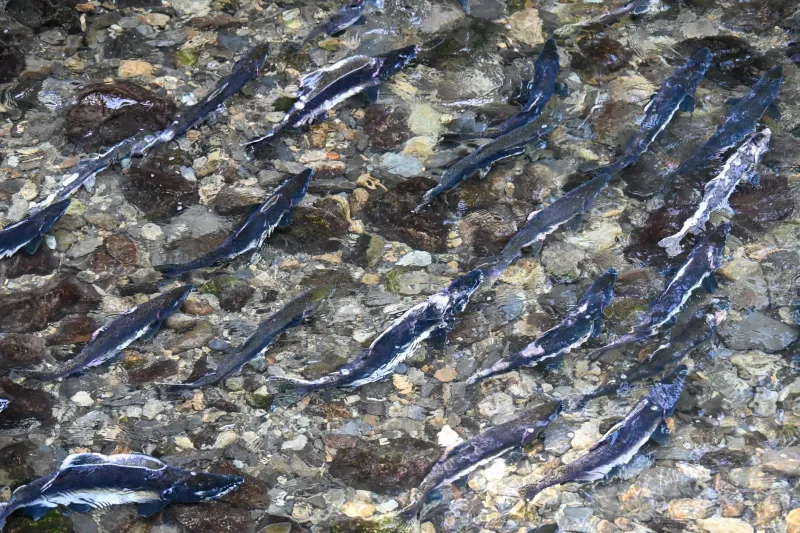
Every year, millions of juvenile salmon are released into Pacific Northwest waterways from state and federally operated hatcheries, their origins marked not by the cold, swift currents of a free-flowing river but by the controlled chemistry of concrete raceways. For the 73 remaining Southern Resident killer whales navigating the Salish Sea, these fish represent calories—critical, desperately needed calories in a population already teetering at the edge of viability. But among scientists, fisheries managers, and conservation advocates, a contentious debate has emerged around a deceptively simple question: are hatcheries helping Southern Residents survive, or are they helping policymakers avoid confronting the deeper structural failures that made survival so precarious in the first place?
The answer, as with most things involving endangered species policy, is neither clean nor comfortable.
A Population Running on Empty
Southern Residents are dietary specialists. Unlike transient killer whales, which hunt marine mammals, Southern Residents consume almost exclusively Chinook salmon—the largest, fattiest, and most nutritionally dense Pacific salmon species. When Chinook populations collapsed across the Columbia River Basin and Puget Sound watersheds throughout the late twentieth century, the consequences for Southern Residents were direct and devastating. Reproductive failures increased. Calves born malnourished rarely survived their first year. Adult whales began exhibiting what researchers describe as "peanut head," a visible depression behind the skull caused by the resorption of fat reserves—a biological distress signal written in flesh.
Hatcheries stepped into this void. Today, hatchery-origin Chinook salmon constitute a significant portion of the fish available to Southern Residents during critical feeding seasons. Some estimates suggest that in certain corridors and at certain times of year, hatchery fish may represent the majority of accessible prey. For a population this small and this hungry, that is not a trivial contribution.
The Pragmatist's Argument
Conservation pragmatists—including some fisheries biologists who have spent careers watching wild salmon populations decline—argue that the immediate nutritional needs of Southern Residents cannot wait for the decades-long project of wild salmon restoration to bear fruit. Removing or significantly scaling back hatchery production now, they contend, risks accelerating the very extinction event that conservationists are working to prevent.
"We are dealing with a population that does not have the luxury of time," said one Northwest fisheries researcher, speaking at a recent marine mammal symposium. "If we prioritize ecological purity over immediate food availability, we may be making a philosophical statement over a dying pod's grave."
Proponents of hatchery expansion point to several potential benefits beyond raw caloric supply. Strategically timed releases can be calibrated to coincide with Southern Resident feeding migrations. Hatcheries can theoretically be sited in river systems where wild salmon have already been functionally eliminated—providing fish without competing directly with remnant wild populations. And modern hatchery management, advocates argue, has grown considerably more sophisticated than the blunt-instrument operations of the mid-twentieth century.
The Ecologist's Warning
Opposing voices, however, raise concerns that extend well beyond individual hatchery operations. Ecologists and conservation biologists who specialize in wild salmon systems have documented a troubling array of ways in which large-scale hatchery production can undermine the very wild populations it purports to supplement.
Hatchery salmon, raised in densely packed, low-stimulation environments, frequently exhibit reduced fitness compared to their wild counterparts. When hatchery fish stray into wild spawning grounds—which they do with documented regularity—they can dilute the locally adapted genetic traits that allow wild salmon to navigate specific river conditions, resist particular pathogens, and time their migrations with precision. Over multiple generations, this genetic homogenization can erode the resilience of wild populations in ways that are difficult to reverse.
There is also the question of ecological displacement. Hatchery releases can outcompete wild juvenile salmon for food and habitat in estuaries and nearshore marine environments. A river system already stressed by habitat degradation, elevated water temperatures, and reduced flow does not necessarily benefit from the addition of millions of hatchery smolts competing for the same limited resources.
Perhaps most critically, hatcheries can function as political sedatives. When artificial production keeps aggregate salmon numbers high enough to sustain commercial and recreational fishing quotas, the political urgency to address the root causes of wild salmon decline—dam operations, agricultural water withdrawals, urban stormwater runoff, inadequate riparian buffers—diminishes proportionally. The fish are there, at least on paper, and the pressure to make harder, costlier choices recedes.
The Dependency Trap
This is the crux of what some researchers are calling the "dependency trap." Southern Residents adapted to prey on wild salmon because wild salmon, over thousands of years, evolved behaviors, migration patterns, and nutritional profiles that made them exceptionally reliable and accessible prey. Hatchery salmon, by contrast, are managed for human fishery objectives—their release timing, locations, and volumes determined by agency budgets and fishing industry interests, not by the foraging needs of killer whales.
A Southern Resident population sustained primarily by hatchery fish is, in a meaningful sense, a population whose survival has been outsourced to the continuity of a government program. Programs can be defunded. Priorities shift. Climate change is already disrupting the ocean conditions that hatchery managers depend upon to calibrate release timing. The ecological foundation that would allow Southern Residents to persist independently—abundant, self-sustaining wild Chinook populations across multiple river systems—does not become stronger because hatcheries are producing more fish. In many documented cases, it becomes weaker.
Threading the Needle
The most defensible policy position, supported by a growing body of peer-reviewed literature, is not a binary choice between hatcheries and wild salmon restoration but a rigorously managed integration of both—with explicit safeguards against allowing artificial production to substitute for structural reform.
This means maintaining hatchery production in specific, carefully selected systems where it demonstrably supplements Southern Resident prey availability without materially compromising wild salmon recovery efforts. It means investing simultaneously and aggressively in dam removal, habitat restoration, and water quality improvements that create the conditions for self-sustaining wild populations. And it means establishing clear, enforceable metrics that prevent hatchery expansion from being used as a political justification for delaying the harder work.
The Snake River dam removal process, now underway after decades of advocacy, represents exactly the kind of structural intervention that hatcheries cannot replace. Four dams blocking access to some of the most productive wild Chinook habitat remaining in the continental United States have suppressed salmon populations that Southern Residents historically depended upon. No hatchery program, however sophisticated, can replicate what a free-flowing river provides.
What the Whales Actually Need
Southern Residents do not need a managed food supply. They need a restored ecosystem—one in which wild salmon are abundant enough, distributed enough, and nutritionally rich enough to support a viable, self-sustaining killer whale population across generations. Hatcheries, deployed with discipline and transparency, may buy time toward that goal. Deployed carelessly, or used as a substitute for it, they risk becoming one more layer of institutional failure wrapped around a species that is running out of chances.
The salmon ranching gamble, in the end, is not really about fish. It is about whether the institutions responsible for Pacific Northwest fisheries management have the political will to pursue the difficult, expensive, long-horizon work of genuine ecological restoration—or whether they will settle, once again, for a solution that looks like progress while the underlying crisis deepens beneath the surface of a quieting sea.