Notebooks and Binoculars: How a Grassroots Network of Volunteers Is Rewriting Southern Resident Science
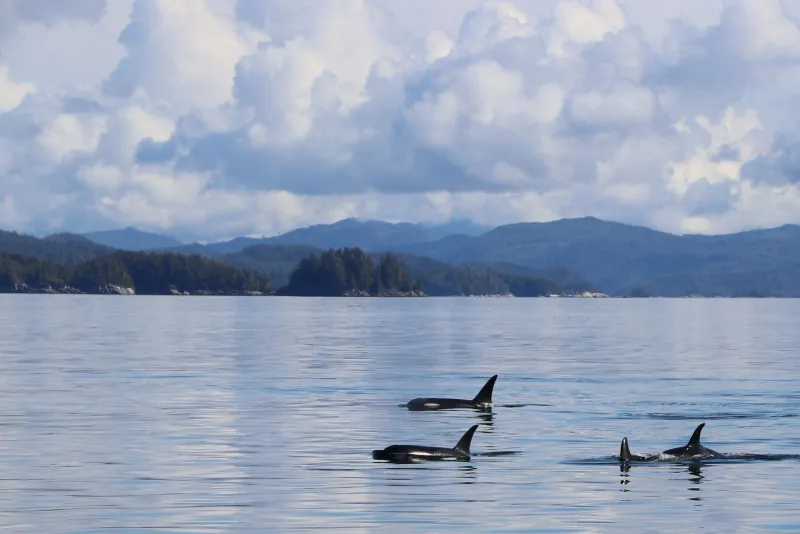
On any given morning in the San Juan Islands, before the first ferry departs Friday Harbor and while commercial fishing boats are still idling at the docks, a small aluminum skiff may already be cutting quietly through the fog. At the helm is someone who does not hold a federal research permit, does not draw a university salary, and whose name does not appear on any government monitoring contract. What they do carry is a waterproof field notebook, a high-resolution hydrophone, a DSLR camera with a telephoto lens, and years — sometimes decades — of accumulated observational experience that no graduate program fully replicates.
This is citizen science in its most sophisticated form, and in the world of Southern Resident killer whale research, it has become something the professional community can no longer afford to overlook.
The People Behind the Data
The network is loosely organized and deliberately decentralized. It includes retired marine biologists who left institutional positions but never left the water, schoolteachers who spend their summers logging dorsal fin photographs, software engineers who built their own acoustic analysis tools in their spare time, and lifelong Pacific Northwest residents whose families have watched the same pods for three generations. What unites them is not credential or affiliation but an acute attentiveness to the whales themselves — an attentiveness that, in some cases, surpasses what any research schedule constrained by grant cycles and institutional review boards can sustain.
Many of these individuals contribute to established platforms such as the Center for Whale Research's photo-identification database, which has relied on community-submitted imagery for decades. Others operate entirely independently, maintaining personal longitudinal records that span fifteen, twenty, even thirty years of continuous observation. Several have developed their own standardized protocols for recording foraging behavior, acoustic activity, and group cohesion — protocols that, when subjected to peer review, have proven methodologically sound.
What They're Finding That Others Missed
The contributions of this network are not merely supplementary. In several documented cases, citizen observers identified behavioral anomalies — abnormal surface patterns, apparent weight loss in specific individuals, unusual pod separations — weeks or months before those findings appeared in formal research literature. Because these volunteers are on the water more frequently, across more varied conditions, and without the logistical constraints that limit vessel-based institutional research, they accumulate a breadth of observational coverage that professional teams simply cannot match.
One particularly significant area involves the documentation of prey acquisition behavior. Independent observers have produced detailed records of foraging sequences, including failed hunting attempts, extended search patterns, and inter-individual prey sharing, that have added meaningful texture to the scientific understanding of how food scarcity manifests behaviorally across different age and sex classes. This granular, time-stamped behavioral data complements acoustic and physiological research conducted by institutional teams and, in some instances, has prompted researchers to revisit earlier assumptions about Southern Resident feeding ecology.
Acoustic monitoring represents another frontier. Several citizen scientists have deployed low-cost, self-built hydrophone arrays in areas that receive limited coverage from established monitoring infrastructure. The recordings they have gathered have contributed to analyses of call repertoire changes over time — a line of inquiry with direct implications for understanding how population decline affects cultural transmission among the whales.
The Institutional Friction
Despite these contributions, the relationship between grassroots observers and the formal research establishment has not always been frictionless. Some professional researchers have expressed reservations about data quality, observer bias, and the absence of standardized collection protocols across the network. These are legitimate concerns, and the more rigorous members of the citizen science community acknowledge them openly. The response, in many cases, has been to develop and publish explicit methodological frameworks, submit findings to peer-reviewed journals, and seek formal collaboration with institutional partners willing to engage in good faith.
The results of that engagement have been instructive. Several co-authored papers now appear in respected marine mammal science journals, listing both credentialed researchers and independent observers among their contributors. These collaborations suggest that the traditional hierarchy of marine science — in which institutional researchers generate knowledge and citizen observers serve merely as data collectors — is giving way to something more genuinely collaborative.
There is also a policy dimension to this shift. As federal and state agencies develop recovery plans for Southern Residents under the Endangered Species Act, the evidentiary record they draw upon is increasingly shaped by data that originated outside traditional research institutions. Citizen-generated documentation of vessel disturbance, acoustic interference, and prey availability in specific locations has appeared in formal comment periods, environmental impact assessments, and legal proceedings. The notebooks and hard drives of independent observers have, in other words, begun to influence the regulatory landscape.
Why This Matters for Recovery
The Southern Residents currently number fewer than 75 individuals. Every behavioral observation, every acoustic record, every photograph that allows researchers to track body condition over time represents a piece of a puzzle whose solution is not abstract — it is the difference between a population that stabilizes and one that quietly disappears. In that context, the dismissal of rigorous, consistently gathered citizen science data on the basis of institutional provenance alone is not merely intellectually parochial. It is a conservation liability.
The informal network of observers described here is not a replacement for professional marine mammal research. It is a complement to it — one that extends temporal coverage, broadens geographic scope, and introduces a quality of sustained, patient attention that institutional constraints often preclude. Recognizing that contribution formally, funding the development of shared protocols, and creating structured pathways for citizen-generated data to enter the scientific record are not gestures of sentimentality. They are practical necessities for a species running out of time.
The whales do not distinguish between the research vessel and the aluminum skiff. They surface, they vocalize, they hunt, and they grieve regardless of who is watching. The question is whether we are paying close enough attention — and whether we are willing to count every careful pair of eyes.