Plastic in the Blood: The Emerging Science of Microplastic Contamination in Southern Resident Killer Whales
A Contaminant Without a Face
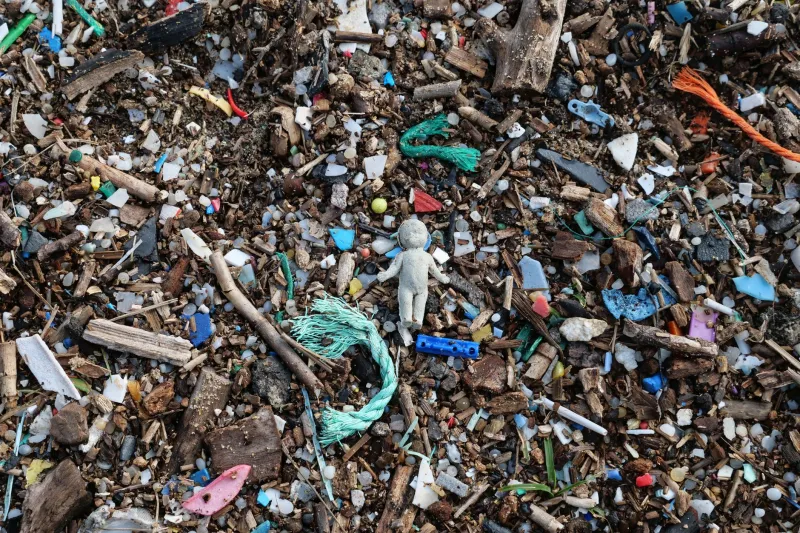
When people think about threats to Southern Resident killer whales, they tend to picture things they can see: vessel wakes too close to a surfacing whale, a river dammed into silence, a salmon run reduced to a trickle. Microplastics offer no such visual clarity. They are, by definition, invisible to the naked eye — fragments, fibers, and beads smaller than five millimeters that have infiltrated virtually every aquatic environment on Earth. The Salish Sea is no exception.
For a population of fewer than 75 individuals already contending with prey scarcity, toxic contamination, and chronic acoustic disturbance, the emergence of microplastics as a credible biological threat is not a distant hypothetical. It is an accelerating reality that current monitoring frameworks are only beginning to measure — and one that conservation policy has been slow to address.
How Plastics Enter the Salish Sea
The Pacific Northwest generates microplastics through a staggering range of ordinary activities. Tire rubber abraded from roadways washes into stormwater systems during rain events and flows directly into Puget Sound and connected waterways. Synthetic textiles — fleece jackets, polyester athletic wear, acrylic upholstery — shed microscopic fibers with every wash cycle, fibers that pass through most municipal wastewater treatment systems largely intact. Single-use packaging fragments over time under UV exposure and wave action, breaking into progressively smaller particles that resist further degradation.
Studies conducted in Puget Sound have detected microplastic concentrations in surface waters and sediments at levels consistent with heavily urbanized marine environments. The Seattle metropolitan area, with its combined sewer overflows, industrial waterfront, and high population density, contributes substantially to this load. So do the shipping lanes that traverse the Southern Residents' core habitat — vessels shed paint particles and release ballast water carrying plastic debris from distant ports.
Once in the water column, these particles do not remain inert. They adsorb persistent organic pollutants, heavy metals, and endocrine-disrupting chemicals onto their surfaces, effectively concentrating toxicants that were already present in the marine environment and delivering them in a new, potentially more bioavailable form.
The Food Web as a Conveyor Belt
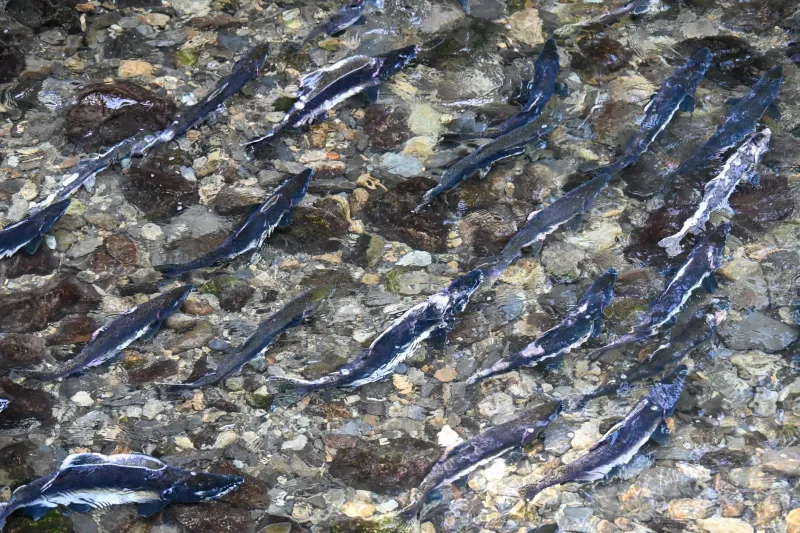
Microplastics enter the Southern Resident food web at its base. Zooplankton and filter-feeding invertebrates ingest particles directly from the water column, mistaking them for prey. Small forage fish consume contaminated invertebrates. Chinook salmon — the preferred and often essential prey species for Southern Residents — feed on those forage fish across multiple years and thousands of miles of ocean habitat before returning to Pacific Northwest rivers.
Researchers studying Pacific salmon have documented microplastic particles in the gastrointestinal tracts of wild Chinook, coho, and sockeye. A 2021 study examining juvenile salmon in the Columbia River estuary found microplastic ingestion rates that correlated with proximity to urban runoff sources. Given that Southern Residents depend overwhelmingly on Chinook salmon, consuming dozens of fish per day during productive foraging periods, the cumulative plastic load transferred through each meal warrants serious scrutiny.
The process of biomagnification — whereby contaminants concentrate as they move up the food chain — is well established for fat-soluble pollutants like PCBs and PBDEs, chemicals that have already been detected in Southern Resident blubber at some of the highest levels recorded in any marine mammal population worldwide. Whether microplastics and their adsorbed chemical cargo follow a similar magnification pathway in cetaceans remains an active area of investigation, but preliminary evidence from other marine mammal species offers little reassurance.
What the Research Currently Shows
Direct evidence of microplastic accumulation in free-ranging killer whales is still limited by the obvious challenges of non-invasive sampling. Researchers have turned to blubber biopsies, fecal analysis, and the study of stranded individuals to piece together a preliminary picture.
A landmark 2020 study published in the journal Environmental Science & Technology analyzed blubber samples from stranded cetaceans across multiple species and confirmed the presence of microplastic particles in tissue. Separate research on bottlenose dolphins and harbor porpoises — species more accessible to systematic sampling — has documented microplastics in lung tissue, liver, and the gastrointestinal tract, suggesting systemic distribution rather than simple gut passage.
For Southern Residents specifically, the most revealing window has been fecal sampling conducted by researchers using trained detection dogs aboard small research vessels. These samples, collected non-invasively from the water's surface, have yielded data on diet, stress hormones, and reproductive status. Microplastic analysis has been added to some of these sampling protocols in recent years, and while peer-reviewed results specific to Southern Residents remain preliminary, the broader pattern emerging from comparative cetacean research is difficult to dismiss.
Killer whales present a particular concern because their extreme longevity — females can live past 90 years — means decades of cumulative exposure. Particles and associated chemicals that enter the body and resist excretion have an exceptionally long window in which to cause harm.
Known and Suspected Health Effects
The mechanistic pathways through which microplastics may harm large cetaceans are not fully characterized, but laboratory and wildlife studies point toward several areas of concern. Physical irritation and inflammation of gastrointestinal tissue, disruption of endocrine signaling, immune suppression, and interference with reproductive hormones have all been documented in smaller marine organisms exposed to environmentally relevant concentrations of microplastics and their associated chemical contaminants.
For a population in which reproductive failure is already a defining crisis — Southern Residents experience a high rate of unsuccessful pregnancies, and calves that are born often do not survive their first year — any additional source of hormonal disruption or immune compromise carries outsized significance. The whales' fat-soluble toxic burden is already believed to impair immune function and reproductive success. Microplastics may be amplifying that burden in ways current monitoring is not yet equipped to quantify.
The Monitoring Gap
Despite growing scientific concern, no systematic, long-term program exists to track microplastic accumulation in Southern Residents or their prey specifically. Existing contamination monitoring tends to focus on legacy pollutants — PCBs, flame retardants, pesticides — for which analytical methods are well established. Microplastic analysis requires different sampling protocols, laboratory infrastructure, and quality control standards, and federal funding for this work in the context of Southern Resident recovery has not kept pace with the science.
The National Oceanic and Atmospheric Administration's Southern Resident Recovery Plan, last substantively updated in 2008, does not address microplastics. Petitions and scientific commentary have called for a comprehensive revision of the plan to incorporate emerging contaminant threats, but regulatory momentum has been slow. Meanwhile, Washington State has made incremental progress through legislation targeting tire rubber pollution and expanded stormwater treatment requirements — measures that will reduce microplastic inputs over time but do not address the load already cycling through the ecosystem.
Policy Must Catch Up to the Science
The precautionary principle — the foundational idea that policy need not wait for absolute proof of harm when credible evidence of risk exists and the stakes are irreversible — applies with particular force to Southern Residents. This population cannot absorb the cost of waiting another decade for definitive mechanistic studies. The trajectory is already dangerous enough.
Congressional action to modernize the Endangered Species Act's recovery planning requirements, combined with dedicated federal investment in emerging contaminant research for listed marine mammals, would begin to close the monitoring gap. Equally important are the upstream interventions: stricter stormwater management standards for municipalities discharging into Salish Sea watersheds, accelerated phase-out of synthetic tire rubber compounds known to leach toxic chemicals, and expanded producer responsibility frameworks that reduce plastic production at its source.
Microplastics are not a future problem. They are accumulating now, in the water, in the salmon, and in all likelihood in the bodies of the whales we are committed to protecting. The least we owe Southern Residents is the scientific attention and regulatory urgency commensurate with what is at stake.